I trace how Kenyan businesses get named
I work where customer talk, listing text, map fragments and AI answers meet. A restaurant may be loved on the street but vague online; a salon may have loyal clients but no repeatable service proof. My job is to find the small proof lines that make one restaurant, salon, clinic, gym or shop easier to recommend than the next one.
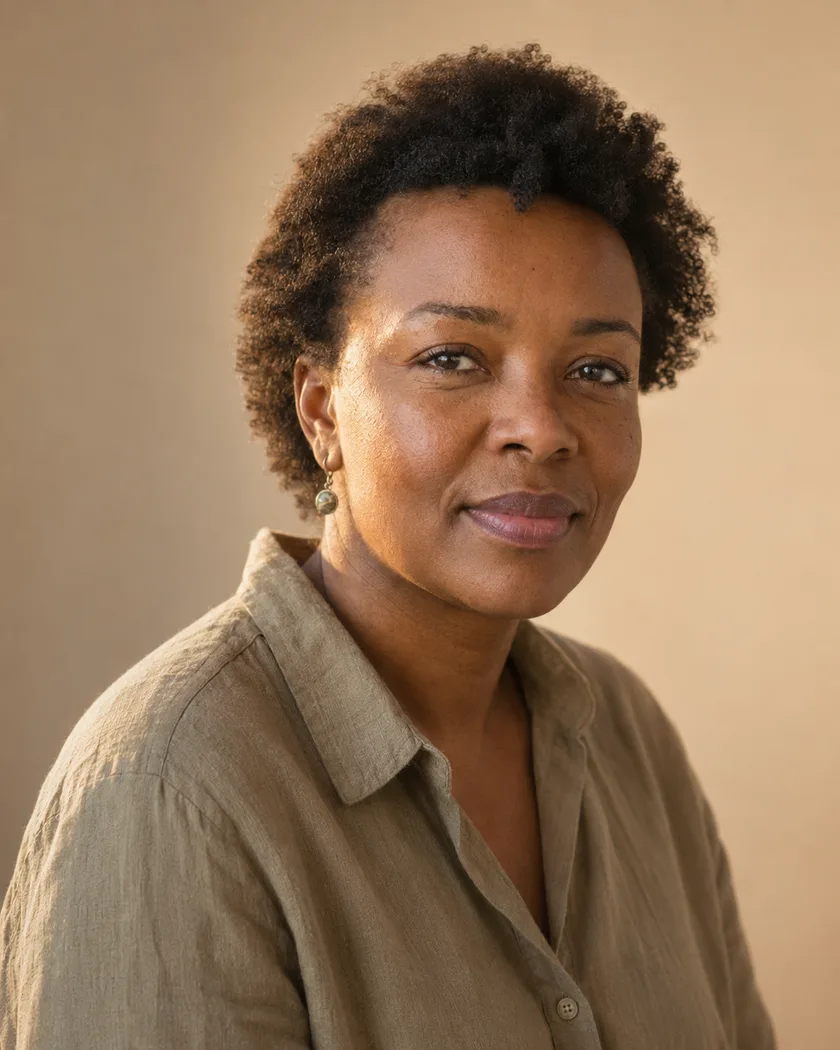
A business does not vanish because it is weak. It vanishes when its public proof is too scattered to repeat.
A plastic table outside a lunch spot can teach more than a dashboard if you sit there long enough. One customer says the sukuma is always fresh. Another says the owner keeps prices clear. Someone else tells a friend to come before the rush because the place fills after one. Then I check the listing and find three tired words: “quality food available.” That gap is where I began. The street knows the business in detail; the internet often files it under a lazy category.
I am from Kenya, and for sixteen years I have worked around consumer-facing businesses that live or die at the moment of choice. Restaurants, salons, gyms, clinics, shops, repair counters, local services. Earlier work had me reviewing local business pages, rewriting service descriptions, comparing map listings with customer-facing websites, cleaning up review language and watching how English and Swahili searches take different paths. I kept notebooks because memory is better when it is physical: one column for what customers actually say, one for what the business publishes, and one for what an answer system repeats. The differences are usually plain. A branch name disappears. A menu is old. A service is described in owner language instead of customer language. A Swahili page sounds translated instead of used.
Now I focus on AI recommendation signals for Kenyan businesses. I look for the missing proof line: a phrase about price, a service detail, a current opening pattern, a delivery radius, a branch landmark, a review theme that appears often enough to be trusted. My stance is practical. Recommendation is repetition with evidence attached. If the evidence is scattered across Instagram captions, WhatsApp flyers, old menu photos, map reviews and half-finished web pages, AI systems will guess, flatten, or skip. I do not try to make a business sound bigger than it is. I try to make its real strengths easier to cite, easier to compare and harder to confuse with the place down the road.
Path into the work
- 2010
Plastic tables outside lunch spots
I started writing down the difference between what customers praised aloud and what a business had actually published online.
- 2012–2015
Rewriting service descriptions
I cleaned up copy for salons, shops and small services, turning owner language into wording a real customer would search and repeat.
- 2016–2018
Maps against websites
I compared map listings with customer-facing pages, tracking where branch names, hours and services quietly disagreed.
- 2019–2021
Review language and bilingual search
I audited review phrasing as evidence and watched how English and Swahili searches took different recommendation paths.
- 2022 onward
AI recommendation signals
I focused the work on how answer engines name local places, and on the missing proof line that lets AI recommend one business over another.
Bring the customer question before the business description.
I start with what people ask, then check whether your public proof can answer it without guesswork.
Send a question